Thongchai Winichakul: Arguably Thailand’s most sacred scholar and intellectual
Exactly 17 years ago, in July 2008, I wrote this piece, Cambodian and Thai Bloggers on Disputed Preah Vihear Temple, for Global Voices.
Back then, I could gauge the sentiments of netizens from both nations by reading what they wrote on online blogs—this was before the rise of Facebook.
The dominant theme at the time was Nationalism vs. Rationalism.
Against the backdrop of this year’s recurring patterns, I revisited this piece I had written and took a deeper dive into the work of Thongchai Winichakul (whose name was mentioned by a Thai source)—a Thai historian and leading scholar in Southeast Asian studies whose research has significantly influenced the understanding of Thai nationalism.
To better understand the mindset and mentality of our neighboring nation, I encourage Cambodian high school students to read Siam Mapped, Thongchai’s best-known book published in 1994, which “critiques existing theories of Thai historiography.”
Siam Mapped has become one of the most influential books in Southeast Asian Studies.
The book helps explain:
Why Thai school maps and education emphasize the shape and “wholeness” of the nation.
Why the Thai public may support aggressive postures over disputed territory.
Why Thai media often reflects nationalist or patriotic sentiment during border tensions.
Why Thailand often frames itself as superior to its neighbors for “never being colonized.”
Why Thai students grow up with a strong emotional attachment to the shape and integrity of Thailand.
Why Thai nationalism often prioritizes central Thai culture and language.
Why some ethnic groups or provinces feel excluded or marginalized.
Why dissenting views on history and borders often face backlash.
A Sino-Thai descent who was born and grew up in Bangkok, he was also one of the student leaders during the Thammasat University massacre in the 1970s.
He later authored Moments of Silence: The Unforgetting of the October 6, 1976, Massacre in Bangkok, and the essay “Remembering/Silencing the Traumatic Past: The Ambivalent Memories of the October 1976 Massacre in Bangkok”.
Updated: 31 July 2025
Manila-based Mong Palatino, Southeast Asia editor of Global Voices, pulled together some of the key elements from what the media from both Cambodia and Thailand. You can read it here: Displaced residents appeal for peace amid the Cambodia-Thailand border conflict
Updated: 22 August 2025
Must-read: Thongchai Winichakul on the Cambodia-Thailand Border Conflict
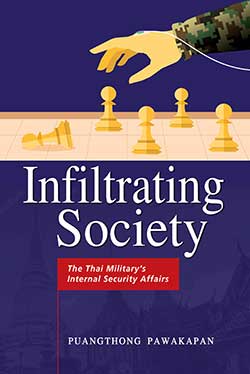
Book Review: Infiltrating Society: The Thai Military’s Internal Security Affairs
Also: